Storage planning tool
RAID Capacity Calculator
Estimate usable capacity, parity or mirror overhead, hot-spare impact and fault tolerance before requesting a server or storage configuration.
RAID 0/1/5/6/10RAID 50/60 spansHot-spare planning
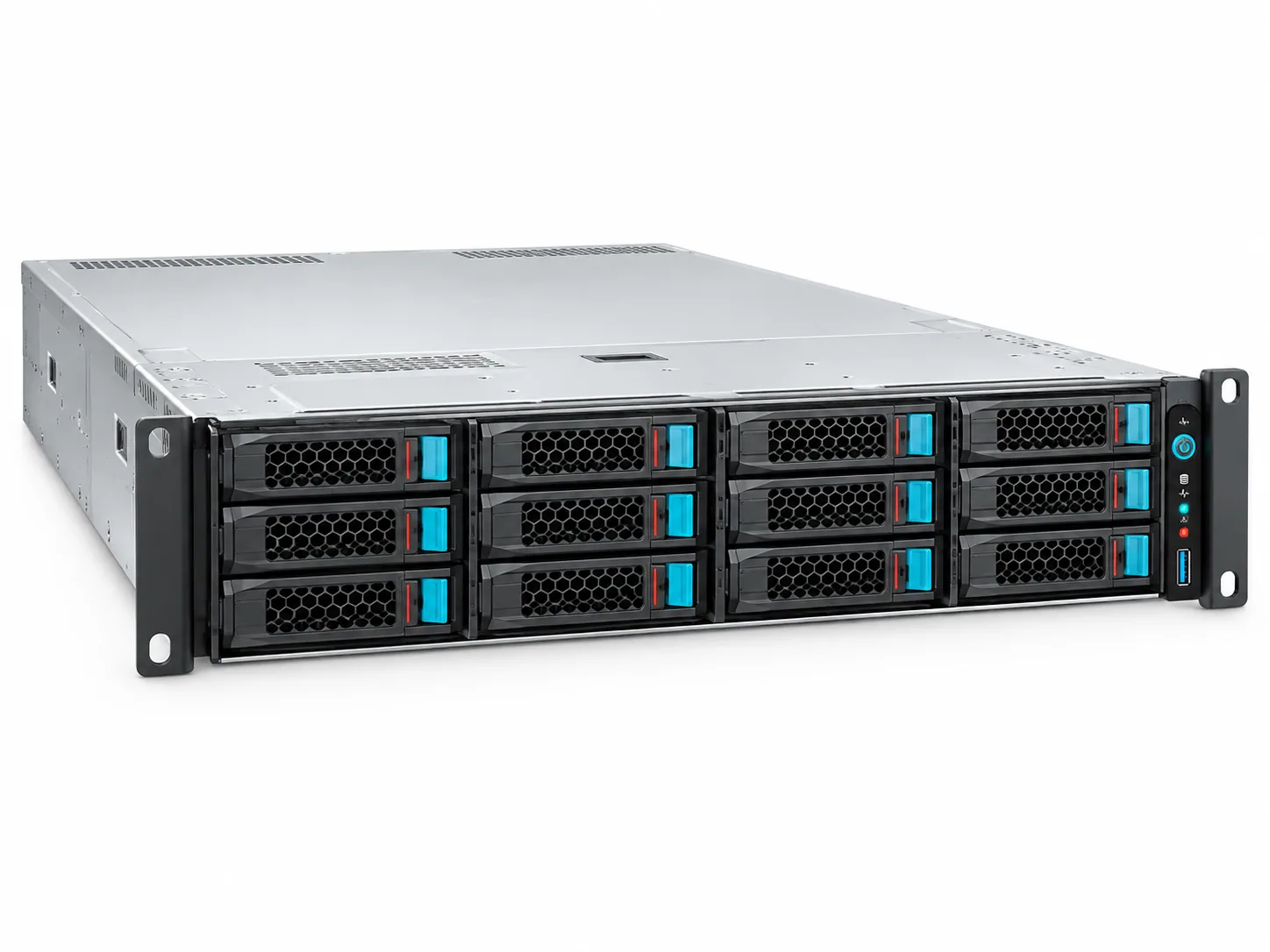
Capacity estimate
Configure your RAID layout
Use equal-size drives for a straightforward estimate. If drive sizes differ, enter the capacity of the smallest drive because larger members normally contribute only that amount to the array.
Estimated result
3 TBRAID 5
Layout4 active drives
Fault tolerance1 active drive
Performance profileGood
Typical useBalanced capacity and protection
Planning estimate
Actual formatted capacity will be lower because of decimal/binary unit conversion, controller metadata, filesystem overhead and vendor implementation. RAID 10/50/60 failure tolerance also depends on which drives fail within mirror pairs or spans.
RAID comparison
Common enterprise RAID levels
Controller capabilities vary, but these are common planning rules for enterprise RAID.
| Level | Minimum drives | Failure tolerance | Nominal efficiency | Typical use |
|---|---|---|---|---|
| RAID 0 | 2 | None | 100% | Maximum capacity/performance where redundancy is not required |
| RAID 1 | 2 | 1 drive | 50% | Simple mirroring for two-drive sets |
| RAID 5 | 3 | 1 drive | (N−1)/N | Balanced capacity and single-drive fault tolerance |
| RAID 6 | 4 | 2 drives | (N−2)/N | Higher fault tolerance for larger arrays |
| RAID 10 | 4, even | 1 drive per mirror pair | 50% | Strong random I/O and fast rebuild characteristics |
| RAID 50 | 6 | 1 drive per RAID 5 span | Depends on spans | Large arrays combining RAID 5 capacity with striping |
| RAID 60 | 8 | 2 drives per RAID 6 span | Depends on spans | Large arrays needing stronger parity protection |
RAID is not a backup
RAID improves availability after certain drive failures, but it does not protect against accidental deletion, malware, corruption, theft, fire or every multi-drive failure scenario. Keep independent backups.
Rebuild risk matters
Large drives can take significant time to rebuild. RAID 6 or RAID 60 may be preferred over single-parity layouts where rebuild exposure and availability requirements are higher.
Controller support matters
Not every RAID controller supports every level, drive count, span layout or online migration option. Confirm the exact controller and firmware before finalizing a design.